I love Top Gun.
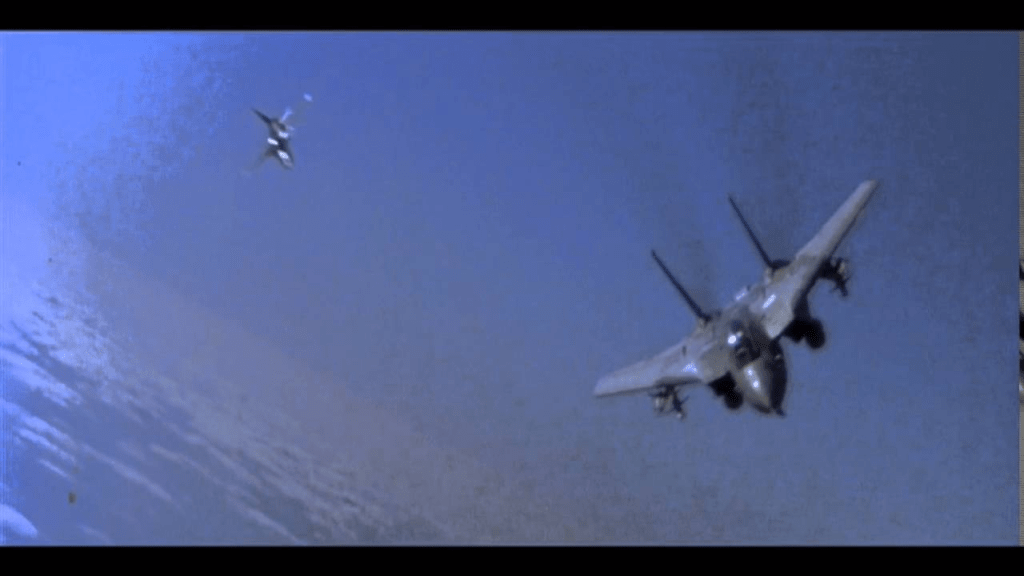
Who doesn’t? Both the original 1986 movie and its 2022 sequel are great, pro-America, pro-U.S. military action movies with great characters and flying sequences. The original is one of my all-time favorites and the sequel is pretty good too, especially compared to the slop Hollywood has been putting out the last decade.
But there’s a problem with it (and I’m going to focus on the 1986 movie here).
The air combat shown in the movie is entirely inaccurate.
My sponsor dad at the Air Force Academy, retired Lieutenant Colonel Mike “Boa” Straight, told me that the combat tactics shown by the F-14s flown by Maverick and Goose, the A-4s at TOPGUN, and the “MiG-28s” flown by the unnamed adversary are ridiculous and decades out of date. And he would know – he flew the A-4s and F-5s in the movie!
Why did the director and writers do this? Because modern air combat would not translate to the screen well; it’s all beyond visual range (BVR) and you would never be able to get both the protagonist’s jet and the enemy fighters in the same shot. Dogfighting is a thing of the past. If you’re in a 5th-gen jet like the F-22 or F-35 and you’re in guns range, something has gone horribly, horribly wrong. Instead, they had the very large F-14 Tomcats – designed to intercept Soviet bombers at long ranges – engage in Korean War-type close-range battles with the other aircraft in the movie.

But why did they make this decision?
As someone with a decade+ of military and aerospace experience – not to mention different security clearances at various points of my life – who is also a writer, I’ll try and answer that question.
Because there is a tradeoff between technical accuracy (BVR air combat) and what I’ll refer to as the rule of cool (fighter jets dogfighting). And there’s a sweet spot for sci-fi, technothriller, and military or espionage thriller writers somewhere in the middle depending on the story.
Why Technical Accuracy Matters
I know that I am not your typical reader. I served in the military for a little over a decade, both in the U.S. Air Force and U.S. Space Force, and have bachelor’s and master’s degrees in astronautical engineering. That being said, people with my background read – a lot. And we read sci-fi and technothrillers (think Tom Clancy or Michael Crichton). Everywhere I have worked has been full of books, either a quasi-Little Free Library or PDFs on the shared drive or just break room discussions about the latest Expanse book.

And we – and other readers – want technical plausibility. There’s nothing worse than reading a good modern-day sci-fi book about (Air Force) F-15 fighter jets taking off from a Navy aircraft carrier. Or an otherwise-excellent sci-fi thriller with a imaging satellite in a low-Earth orbit hovering over North Carolina. Or even little stuff like referring to naval aviators as “pilots” (they hate being called that).
It pulls me, and everyone else with a passing knowledge of the U.S. military or orbital mechanics respectively, out of the story and demonstrates that the author hasn’t done his or her research. It makes me wonder what else you got wrong (a variety of Gell-Mann Amnesia) and to be honest I’m not as interested in the book. And I know I’m not alone – fellow engineers and scientists have told me there’s nothing worse than getting things wrong.
Technical accuracy is awesome when it’s pulled off correctly. Tom Clancy’s books are held up as an example of it done correctly – he wasn’t always right about things (ask a submariner about The Hunt for Red October!), but got enough correct that readers trusted him during the slow build-up of most of his novels. In fact, despite never holding a security clearance, he was investigated for potentially leaking classified information. In the sci-fi realm, there’s Carl Sagan’s astronomical precision in Contact and the crash couches and realistic physics of The Expanse.
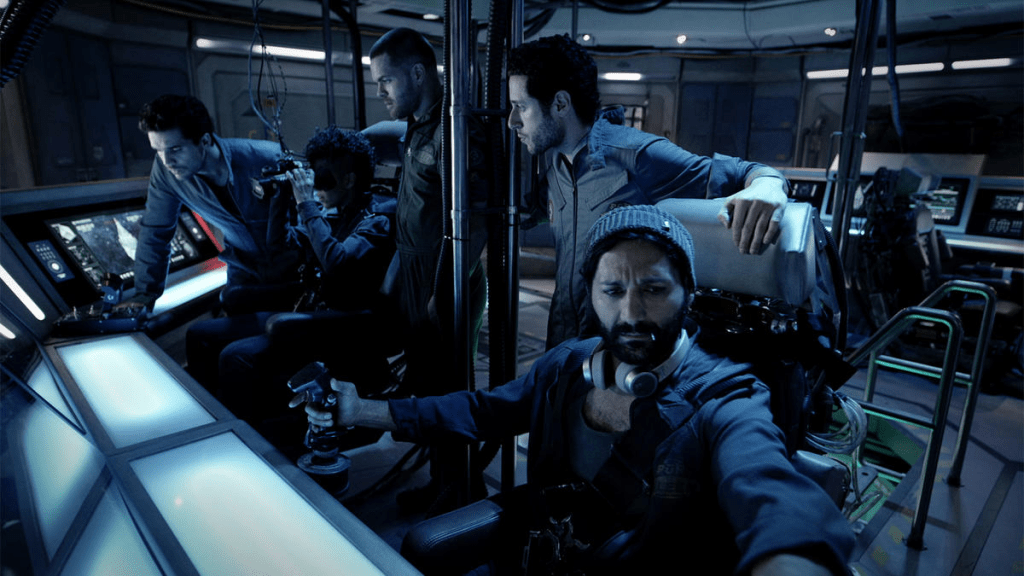
In my own books, many if not all of my positive reviews have commented on my technical accuracy. I try as hard as possible to keep them as close to reality as I can – correct radio callouts in dialog, depicting the behemoth that is the U.S. government bureaucracy, especially its secrecy apparatus, using U.S. aircraft, ships, and satellites correctly, and the like. I like being accurate and getting the details right.
However, there are tradeoffs.
First off, being accurate can be boring. Spy work is not interesting 99% of the time – I shared an office at the NRO with a former CIA case officer who told me his time in the field under cover was the most uninteresting part of his life – mostly handing off briefcases of hundred-dollar bills to people at cafes in the seedier parts of the world. And that was the more thrilling thing that he had done! He was no James Bond, just a ponytailed older white dude who could probably be blown over if a hard enough gust of wind hit him. What would you rather read – Jason Bourne vs Carlos the Jackal or a CIA officer listening to a Russian functionary complain about how his wife won’t cook for him anymore (one of his many stories from the field)?
It also can subvert audience expectations. Readers want a close-in dogfight like in Star Wars or Top Gun, they don’t want to read about an Air Force fighter pilot in a stealth jet firing off AIM-120s before the enemy jets even know they’ve been targeted. There’s no conflict. I have gotten plenty of feedback from readers in the cyber security realm who complain in Lag Delay that Grace Parkowski gets a username and password off of a Post-it note inside of a classified room…when in real life, that’s how small teams share credentials (against security policy, of course!). Modern space combat is slow, dueling satellites making small maneuvers in the GEO belt and then drifting to new locations, nothing like in Star Trek or Babylon 5 or in my novel The Europan Deception. But reality can be much more boring than fiction.
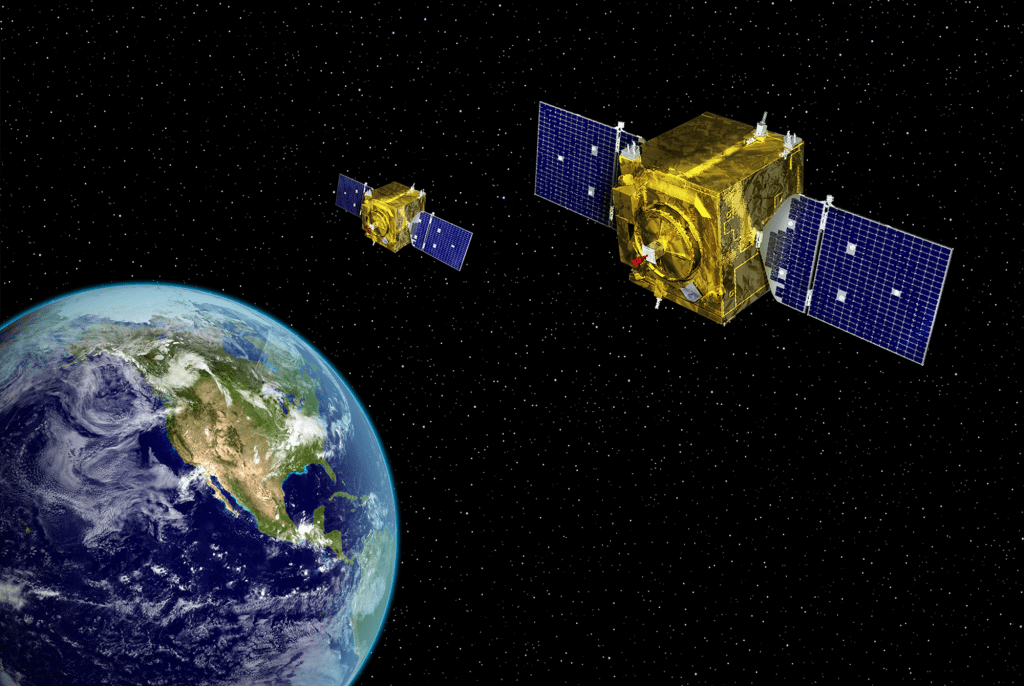
It also gets you in trouble if you’ve ever had a security clearance. I remember from Richard Marcinko’s excellent Rogue Warrior autobiography that he wrote about reviewing “NSA satellite imagery” before a combat mission. Everyone in 2026 knows that the NRO and NGA do IMINT/GEOINT and the NSA does SIGINT/COMINT – it’s public information, found on Wikipedia and the organization’s own websites. But when he wrote that, the existence of the NRO had yet to be declassified. Getting too close to classified information can get you in trouble in other, more obvious ways too. I wrote a very popular blog post on the Pentagon’s security review process.
Technical accuracy is not always possible.
So what can you do instead?
Embrace the Rule of Cool
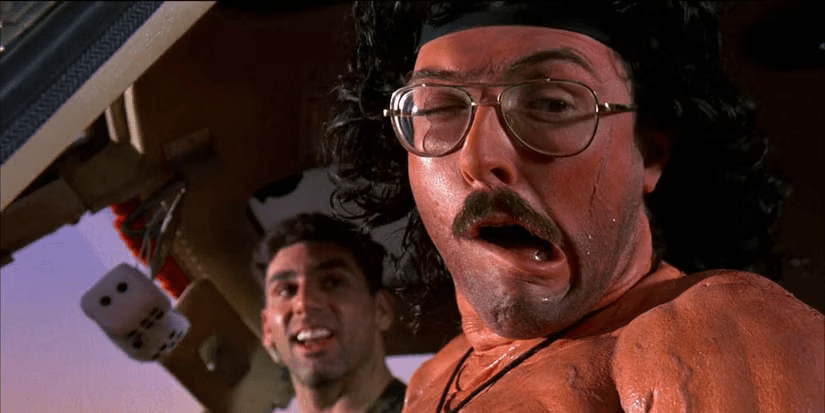
If you’ve seen Weird Al’s excellent UHF you know what comes next after that image – the not-Rambo character chews up and then spits out the bullet he just caught with his teeth in a hailstorm of smaller bullets that explode, killing the Soviet officer who just shot at him.
Is this realistic? Not in the slightest, even in a goofy comedy movie.
But is it cool? I sure think so!
“Rule of Cool” is a term I first saw on TV Tropes a decade or so back, mostly referring to an argument to technical accuracy within TV shows, movies, or video games. Some things are just cool, like the whine of the TIE Fighters’ engines in Star Wars even though there is no sound in space!

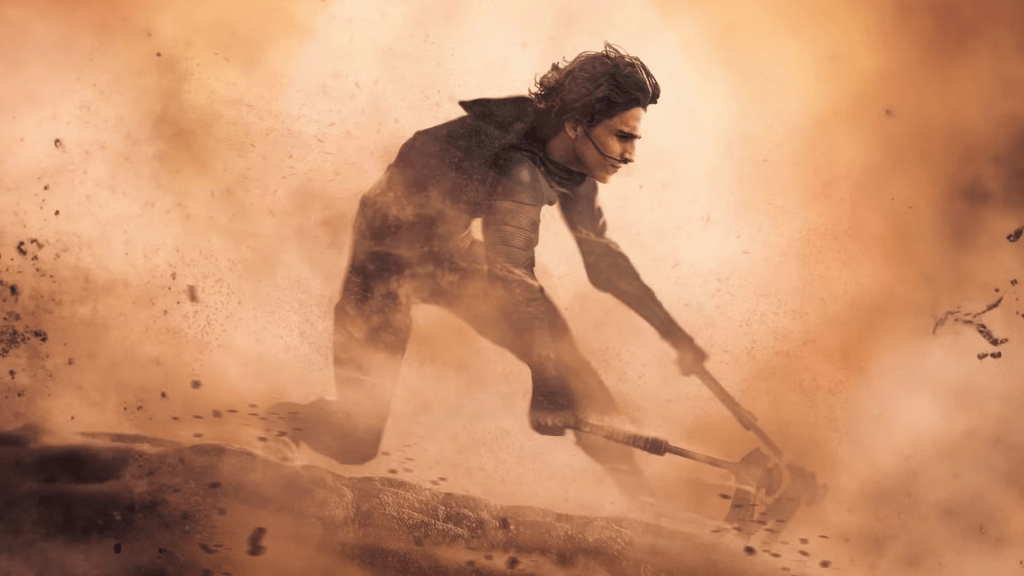
It would be super weird in an epic sci-fi movie like A New Hope if there wasn’t an engine or weapon sound from the fighters during the trench run at its climax. No one would enjoy that. Or how about Paul riding the sandworm in the book and movie Dune – it’s totally unrealistic, yet it’s one of the most memorable scenes in Frank Herbert’s classic.
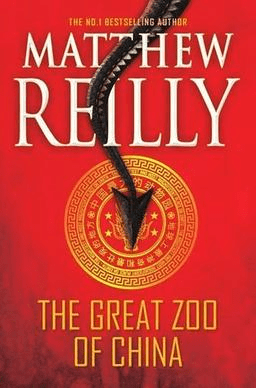
Even more accurate works like Michael Crichton’s Jurassic Park embrace the “rule of cool” at times. The DNA inside of the amber-encased mosquitoes would be so degraded that it wouldn’t have anywhere near enough information to replicate, but the process itself is still somewhat realistic – it’s how scientists would do it if it was possible. Matthew Reilly, another author who leans “rule of cool” more than technical accuracy, took this to the extreme in his novel The Great Zoo of China. Instead of dinosaurs, Reilly’s book has a similar premise, but goes all of the way and skips the dinosaur to feature dragons. And, yes, it’s just as awesome as it sounds.
And I’ve used this a couple of times in my novels – you’ll be able to find them when you come across them. My favorite is in The Martian Incident with the F-44s with jet engines that can suck in the CO2-based Martian atmosphere like modern fighters can with our own N2-based atmosphere here on Earth. Realistic? Hell no. But does it get me fighter jets on Mars? Yes.
But this approach can alienate some readers. I remember an astronautics professor at the Air Force Academy picking apart the movie Gravity scene-by-scene – it’s visually stunning, but technically off base. Avatar and its sequels are another example. It’s a beautiful movie and surprisingly the spaceships are technically accurate, but its planetary ecology is a mess (or so my friends in that area tell me). In my own writing, the first two drafts of Crush Depth were really cool, but they were set on a nuclear submarine – somewhere I have never been, and I was getting a lot of the details just plain wrong. Not a good place to be if you’re a writer known for technical accuracy!
But for writers, there’s a better way.
Striking the Balance
There’s obviously a middle ground that works best for fiction, keeping a writer’s security clearance intact (and the writer out of jail!) and allowing for technical accuracy while keeping the reader entertained. But how to do it?
I’ll offer two approaches, both of which I use in my fiction.
Keep it Simple, Stupid
I believe Howard Tayler called it the “iceberg” method on the Writing Excuses podcast. In it, you show technical accuracy in one specific part of your work – how a jet engine works, super-accurate terminology or dialog, or something along those lines – and the reader will assume that you know much, much more – the bottom of the iceberg – even though you don’t! But for me, it’s KISS, especially in areas out my expertise. I can wax on space and aircraft stuff for days, but if you want me to talk about biology or chemistry I’m way out of my league. For those, I demonstrate that I’m not an idiot and then keep the rest vague.

This also helps in terms of staying out of classified matters that you may or may not be aware of. In Lag Delay, the obvious main character to uncover the conspiracy would be the protagonist’s boyfriend, Space Force captain Mike DePresti. He has a Top Secret clearance and has much more knowledge of the classified world than the uncleared Grace Parkowski. But that would make the entire book classified at the TS/SCI level! Instead, I used Grace as the protagonist, made some comments early on that I knew what I was talking about (Mike works on “space domain awareness” on the “other side of Los Angeles Space Force Base”, if you know you know!) and then left the classified realm alone, telling the rest of the story from Grace’s perspective.

A lot of sci-fi writers aren’t necessarily engineers, scientists, or experts. And that’s fine! Frank Herbert had no technical background and wrote one of the greatest sci-fi series of all time. But what you do have access to is Google, AI, and a community of writers who are generally more than happy to help (I’m always available to help with military/space stuff). Pick a detail, make sure you get it entirely write, and leave the rest vague. Readers will assume that you’re getting everything right.
Know the Rules Before You Break Them
Writing has a lot of rules, both written and unwritten (excuse my pun). And the general rule is that if you want to break a rule, you need to understand what it is and why it’s important before you actually break it.
Technical accuracy is no different.
Let’s say you want to use F-16 fighter jets in your technothriller to attack an enemy ship out at sea. They are a short-range tactical aircraft designed for the European theater, not a long-range strike platform. Yet for whatever reason you want to use the F-16 – and who wouldn’t, it’s a great aircraft, and not just because my USAFA roommate flies them – for story reasons.
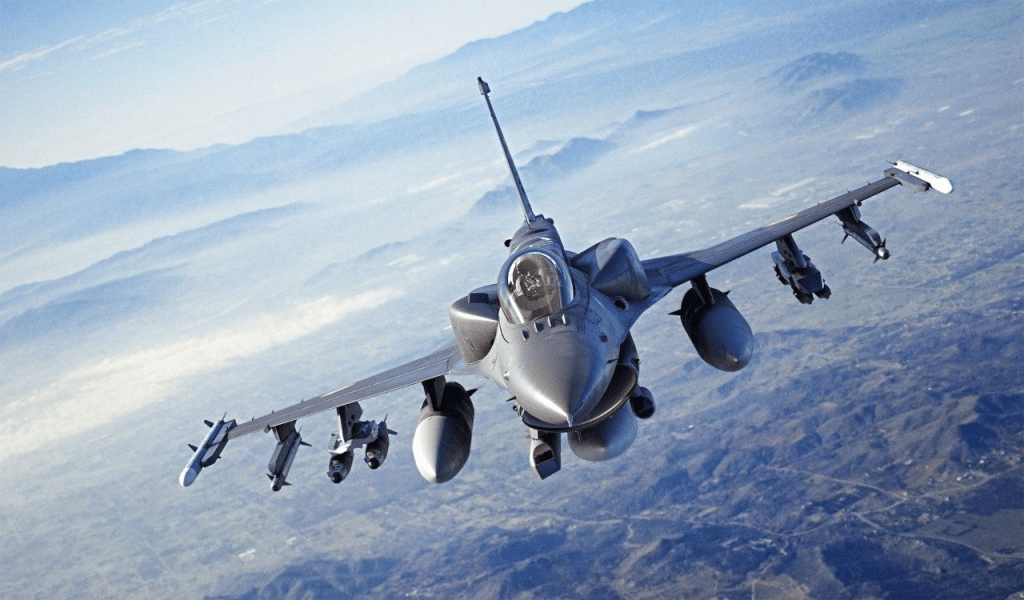
For an F-16 to strike a target thousands of nautical miles from its takeoff point, it would need to carry multiple drop tanks (the largest ones in the picture above) and be refueled from tanker aircraft multiple times both en route and on its return leg. That’s incredibly complicated and would make this part of your story drag out much longer than it needs to be if you want technical accuracy.
So what can you do?
Leave out the boring stuff!
Work out how the mission would work, then figure out what you need and what you don’t. In this case, skip the refueling, the drop tanks, any kind of things that detract from the tension or pacing. Uninformed readers won’t know better and those in the know will either think you dropped it for effect (see KISS) or might not pick up on it. If a reader asks you about it in an email or Tweet, you have the answer. Keep the important parts and make sure the plot moves quickly enough that a reader might not notice that you skipped over them.
I do this all the time in my books. In fact, it’s my primary way to write – figure out how it would be done in real life, determine what my readers want to read, then write at a level that someone with some background knowledge can under what I’ve written.
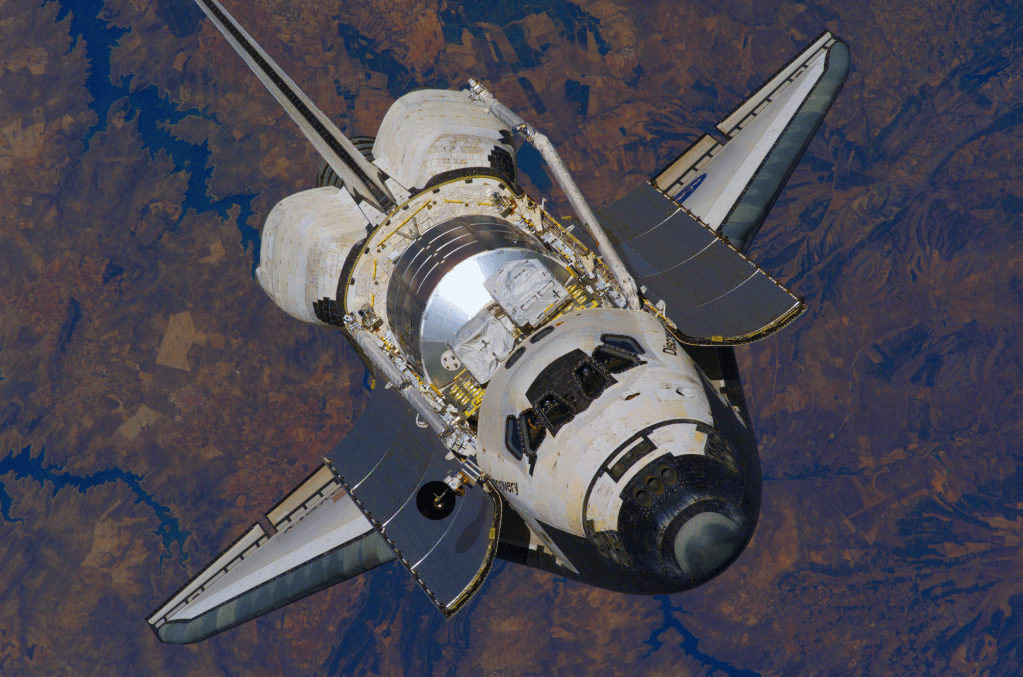
For example, in my upcoming The Saturn Anomaly, the B-plot focuses on a (fictitious) space shuttle recovery of what appears to be an alien satellite. However, there is a threat not only from the recovered spacecraft but also from the ground – the French, West Germans, and Italians want to make sure it never reaches back to Earth. They never had the capability to do this, of course, but the United States did…and I happen to know one of the technical experts for the “Celestial Eagle” shootdown of a defunct satellite in 1985. I got 30 minutes of his time and spoke – at the unclassified level, of course – and realized that the test shot took years to plan, rather than the days that I had set aside in the book. However, having him walk me through the planning and execution gave me the full picture of what is needed for a fighter jet to shoot a satellite. Using this information, I was able to set up a scenario in The Saturn Anomaly that according to my beta readers feels realistic yet doesn’t get clogged down with details or touch anything classified.
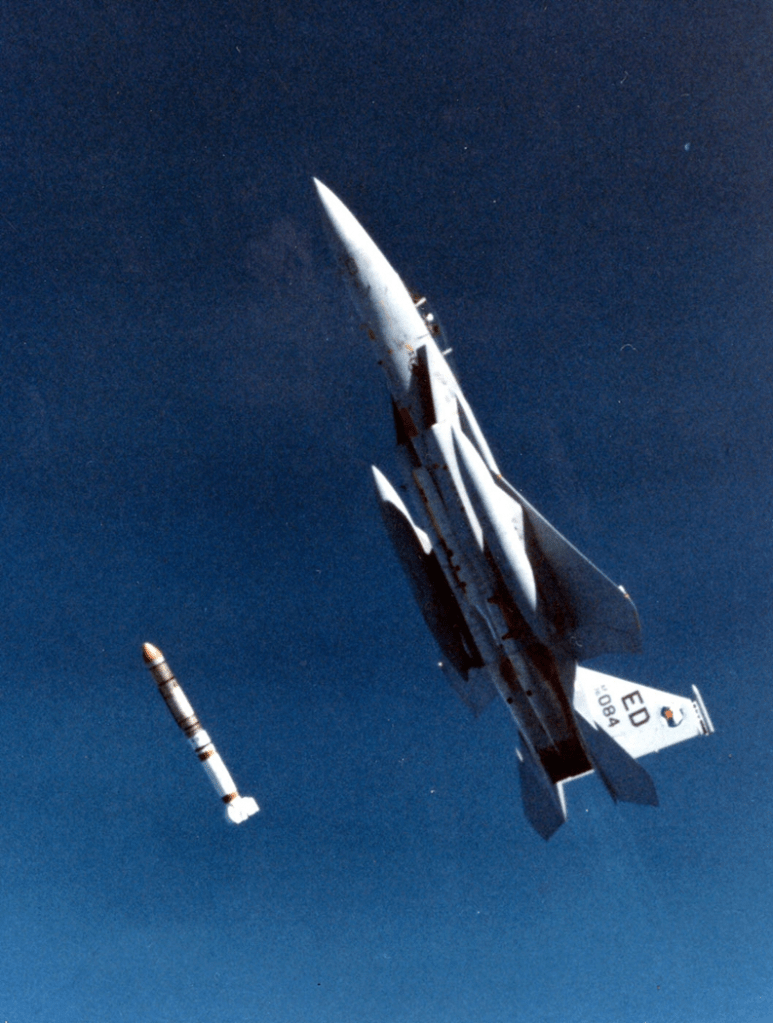
I am able to do this because I have an aerospace background and plenty of engineering and military experience. If you don’t have that, again, talk to people who do! They’ll be able to point out the flaws in your plan – the earlier the better. If you can’t, there’s a ton of open-source stuff – DTIC is great, even if you don’t have a CAC, and shockingly Wikipedia and other open sites are pretty good. I suggest The War Zone too for modern military articles. For more science-y stuff, I recommend really digging into even pop-science articles or journals, even if you don’t have a background in it. You might not understand everything going on but you might pick up some new vocabulary words to give your writing more accuracy.
Conclusion
Technical accuracy is great, but it definitely can bog down a story and if you’re cleared get you into trouble. The “Rule of Cool” is also great, but there’s a large percentage of your audience who wants more realism (with your cool stuff of course). However, by understanding the “real world” version of what you’re writing in your sci-fi or technothriller novel, and trying to put as few (but accurate) facts into your story, you can keep the more demanding readers sated in terms of details while letting the larger audience know that you did your research.
Thanks for reading! If you want to check out my books, here you go – The Martian Incident, Lag Delay, and The Europan Deception are all out in the wild while I’m still working on getting The Saturn Anomaly through the Pentagon security review process and Crush Depth through final edits. And get on my mailing list if you want to know when their statuses change!

 Ryan M. Patrick
Leave a comment